
Sheet 04 — Schedule of designs
Formal Shirt Styles & Designs
Nine families of design, classified like finishes on an architect's schedule — what each one says, how formal it reads, where it belongs and what it should be worn with.
- Sheet
- 04 / 12
- Drawing
- Shirt Styles & Designs
- Type
- Finish schedule
- Entries
- S-01 — S-09
- Studio
- Options Mall · Juhu
| Code | Design | Character | Formality | Best worn | Pair with |
|---|---|---|---|---|---|
| S-01 | Solid shirts | Uninterrupted colour; the foundation of the wardrobe | Boardrooms, interviews, ceremonies | Any suit; patterned ties | |
| S-02 | Striped shirts | Vertical rhythm that lengthens the torso | Office days, client meetings | Plain suits; solid or small-motif ties | |
| S-03 | Checked shirts | A grid of colour; relaxed authority | Daily office, travel, smart weekends | Solid trousers; knit or plain ties | |
| S-04 | Micro-pattern shirts | Reads solid at a distance, detailed up close | Office, presentations | Solid and textured suits | |
| S-05 | Textured shirts | Depth from the weave rather than the print | Evenings, creative offices | Matte wool and linen-look trousers | |
| S-06 | Minimal-pattern shirts | Quiet, tonal prints on light grounds | Business casual, long lunches | Navy or grey trousers | |
| S-07 | Contrast-detail shirts | Collar, bib, piping or trim used as accent | Evenings, celebrations | No tie; plain dark trousers | |
| S-08 | Contemporary designs | Panels, prints and unexpected placement | Dinners, social events | Simple tailoring, solid trousers | |
| S-09 | Classic business shirts | Fine stripes, restrained colour, banker's collar | Corporate days, formal meetings | Charcoal or navy suits; silk ties |
Formality is drawn on a five-step scale — editorial guidance for dressing, not a measurement. 5 = suit-and-tie formal, 1 = relaxed.
Specimen S-01
Solid shirts
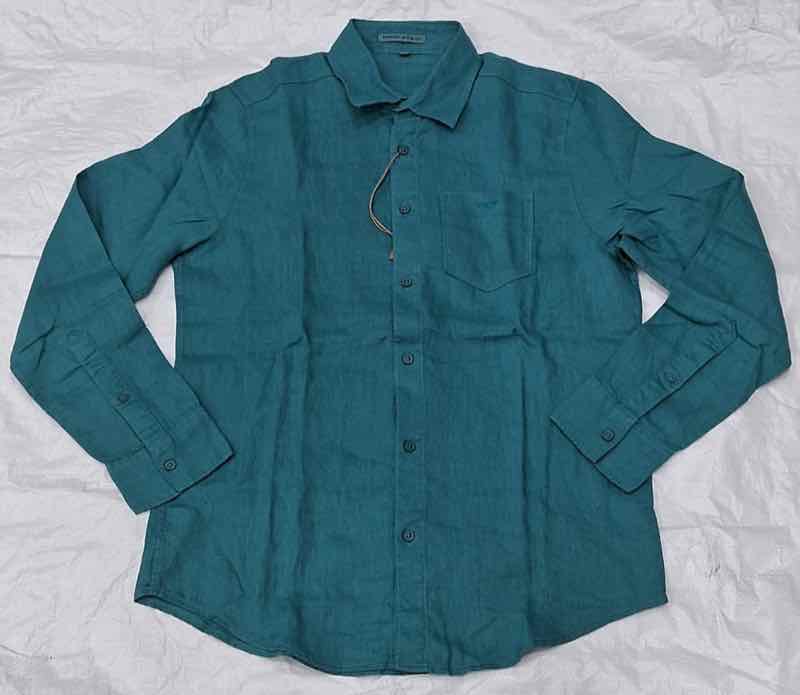
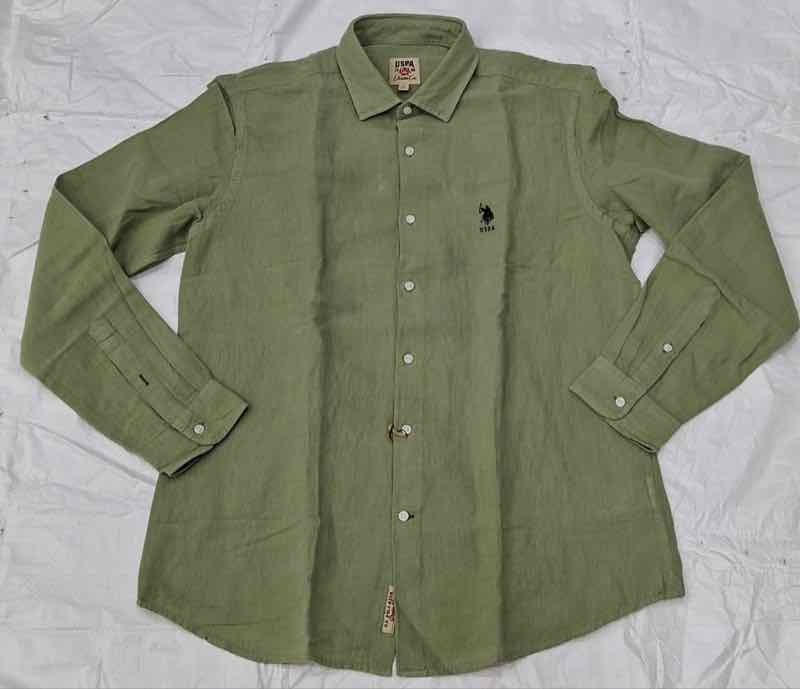
A solid shirt is the plain wall of the wardrobe: it lets everything placed against it — the cut of a suit, the knot of a tie, the line of a collar — be read clearly. That is why white formal shirts and blue formal shirts remain the most worn business shirts for men, and why a man building a wardrobe should begin here.
Colour carries the whole message when there is no pattern to speak for it. White and pale blue are the most formal; deeper solids such as teal, olive or burgundy move the shirt towards evenings and weekends. On a solid shirt, fabric and fit become visible in a way patterns forgive, so look closely at how the collar sits and how the body drapes.
Styling ruleA solid shirt can take any tie pattern. For the sharpest result, choose a tie at least two shades darker than the shirt.
Specimen S-02
Striped shirts
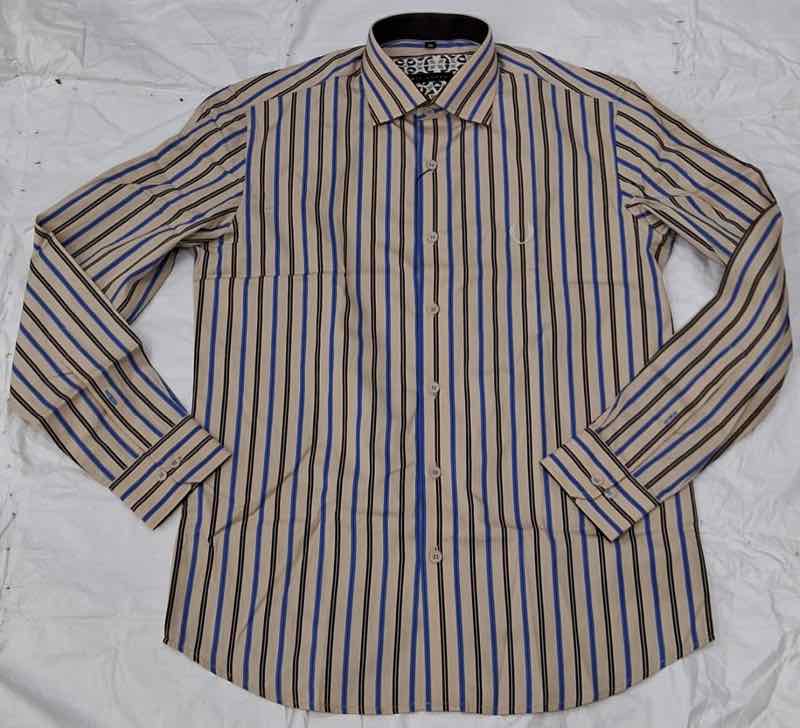
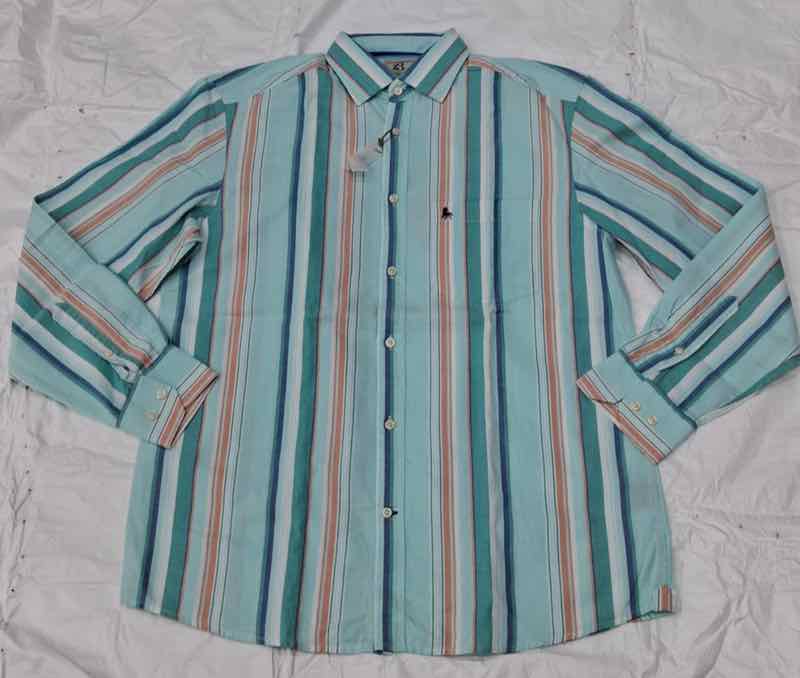
Stripes are the architecture of the shirt — vertical lines that draw the eye upward and make a frame look taller.
The width and spacing of a stripe decide its formality. A fine pencil or hairline stripe sits close to a solid and is at home in any office; a bengal stripe — bands of equal width — is confident but still business-like; a multi-stripe in several colours, like the navy, gold and white specimen here, is better kept for days without a suit or for a navy blazer.
Striped shirts suit most builds because the vertical line is flattering. Broader men benefit from finer, closer stripes; slimmer frames can carry wider spacing. Keep the collar in proportion: a spread collar, as on the aqua specimen, gives a striped shirt a more contemporary face.
Specimen S-03
Checked shirts
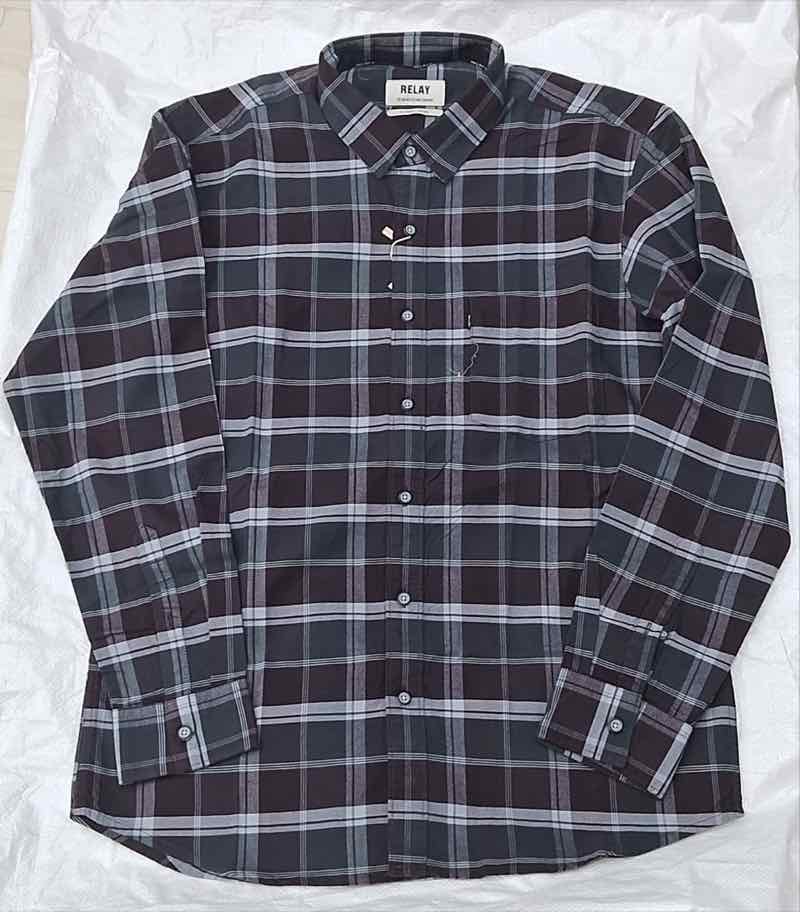
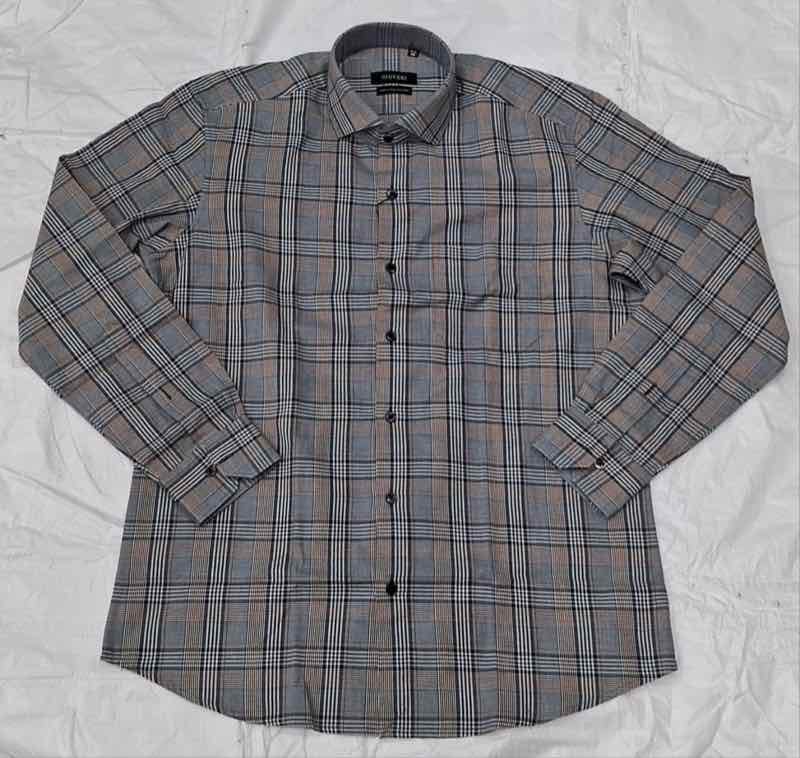
Checks introduce a horizontal line alongside the vertical, and that grid makes them read as slightly more relaxed than stripes. The smaller and lower in contrast the check, the more formal it is: a tight grey-and-blue check behaves almost like a solid under a jacket; a larger multi-colour check belongs to dress-down days.
Checked shirts are the working shirts of the office week — practical, forgiving of creases and easy to wear without a tie. When you do add one, a solid knit or plain silk tie avoids competing with the grid. Gingham, tattersall and windowpane are all members of the family; each is explored further in the business and office wear sheet.
Specimen S-04
Micro-pattern shirts
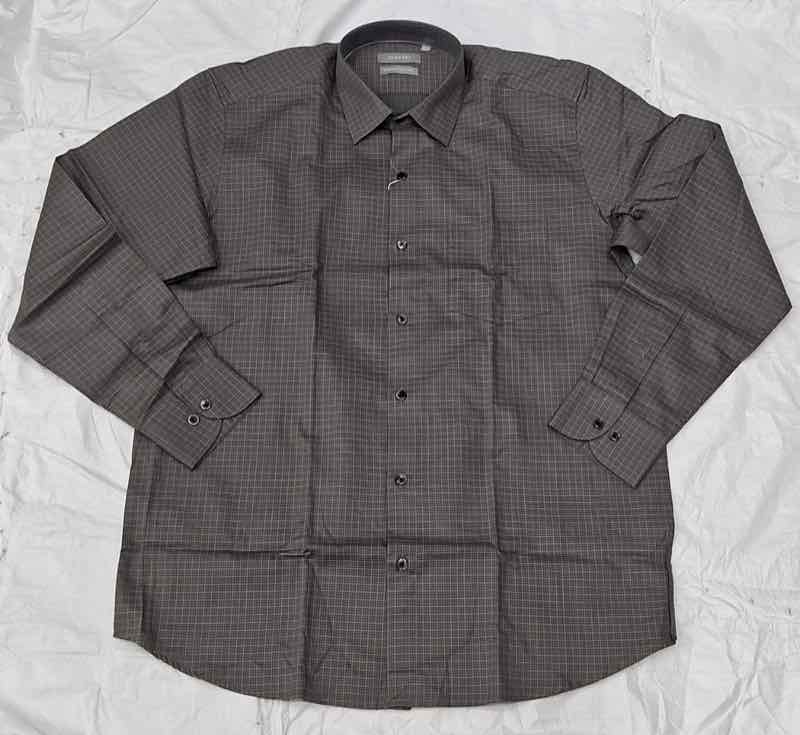
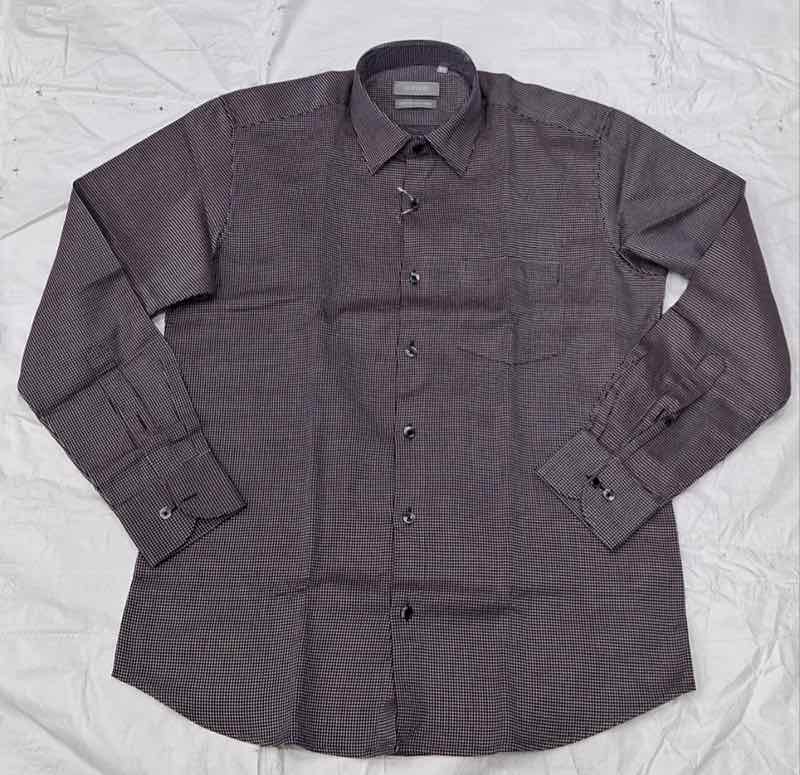
A micro-pattern is a design so small that it dissolves into a single tone at conversation distance and only reveals itself up close: a tiny check, a fine diagonal, a pin-dot. It is the most useful pattern in men's office shirts because it carries the formality of a solid with more depth and character.
Because the pattern reads as texture, micro-patterned shirts pair with almost anything — patterned ties, chalk-stripe suits, checked jackets. Charcoal and plum, as shown, are excellent alternatives to the usual white and blue for a man who wants to stand slightly apart in a meeting.
Test it. Step back two metres from a mirror. If the pattern disappears into one colour, it will behave like a solid in any combination.
Specimen S-05
Textured shirts
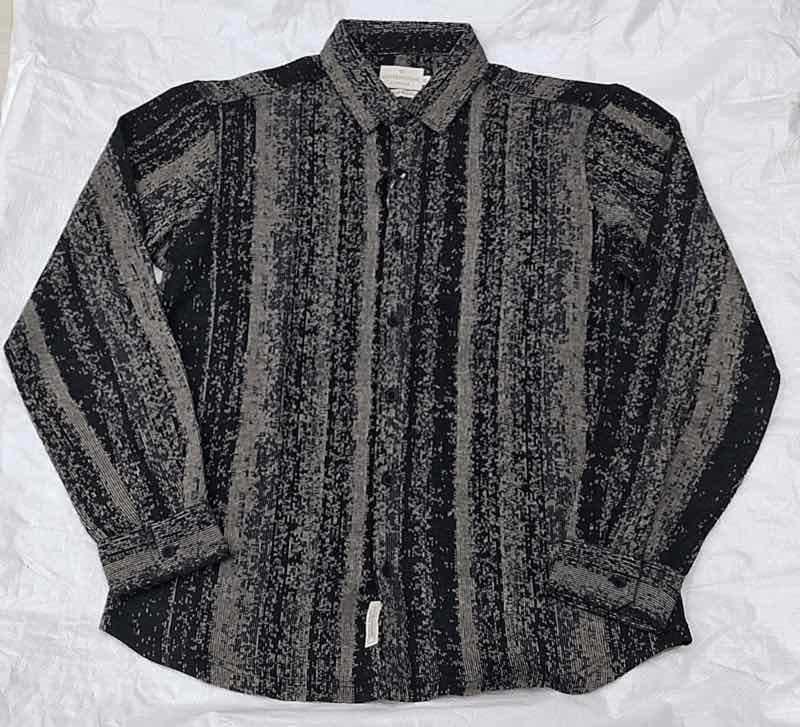
Depth from the weave, not the print.
Textured shirts get their interest from how the yarn is woven — slubs, dobby structures, raised stripes, a linen-like irregularity — rather than from printed colour. Light catches the surface, so even a dark, near-monochrome shirt looks rich.
Texture lowers formality slightly, which makes it ideal for evenings, creative workplaces and Mumbai's long social season. Keep the rest of the outfit matte and simple: a plain wool or linen-look trouser, no tie, or a knitted tie whose texture echoes the shirt. To understand the weaves behind these surfaces, see fabrics and construction.
Specimen S-06
Minimal-pattern shirts
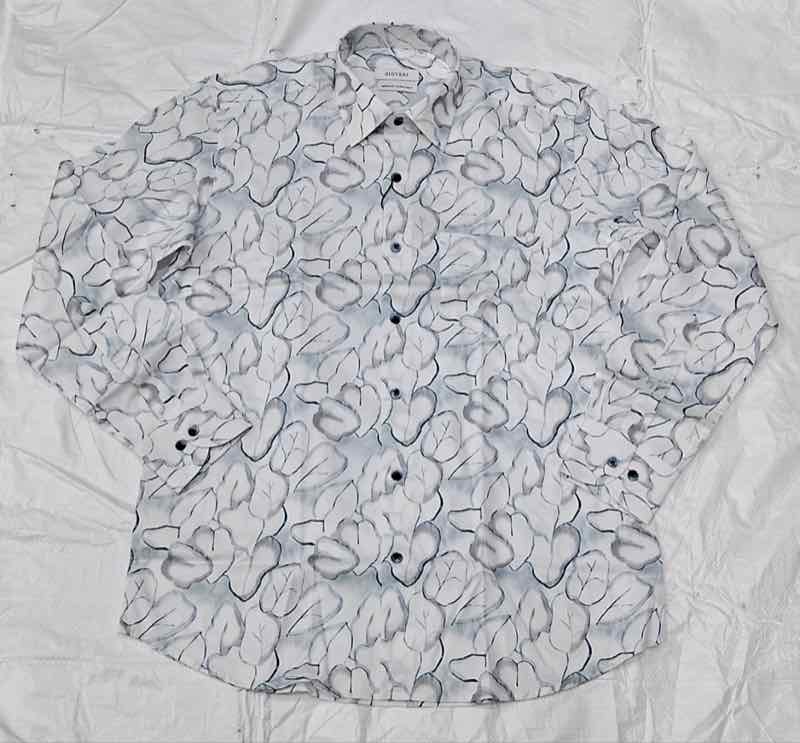
Minimal-pattern shirts sit between a solid and a print: a light ground — white, ivory, pale blue — carrying a soft, low-contrast motif. From across a room they read as a pale shirt; up close there is a quiet signature.
They are the natural choice for business casual: worn open-collared with navy or grey trousers, under an unstructured jacket, or for a lunch that follows a morning of meetings. Because the motif is gentle, a minimal-pattern shirt can still take a plain tie when the day demands it.
Look for tonal colour — grey on white, blue on pale blue. The closer the motif is to the ground colour, the more formal the shirt remains.
Specimen S-07
Contrast-detail shirts
Here the design lives in one deliberate detail: a collar band in another material, a textured bib around the placket, a line of piping along the yoke, a collar and pocket in a second colour. The body of the shirt stays quiet so that the detail can speak.
These are shirts for evenings, celebrations and dinners — occasion wear rather than the boardroom. Wear them without a tie and let the neckline remain visible; keep trousers plain and dark; avoid a second statement piece. One focal point is the whole idea.
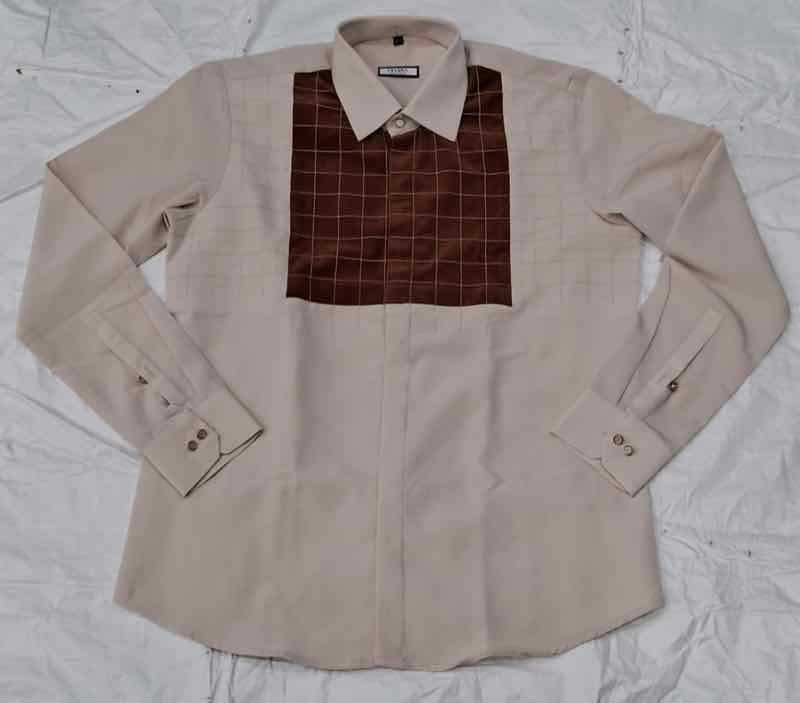
Pl. 04.12Detail: a burgundy textured bib framing the placket on ivory 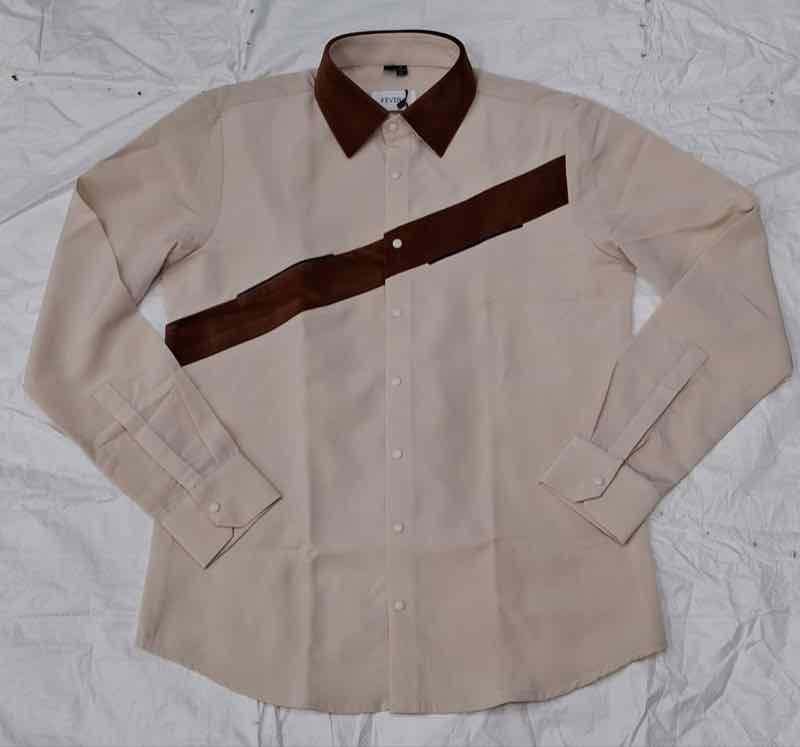
Pl. 04.13Detail: a brown velvet-look collar band with diagonal trim 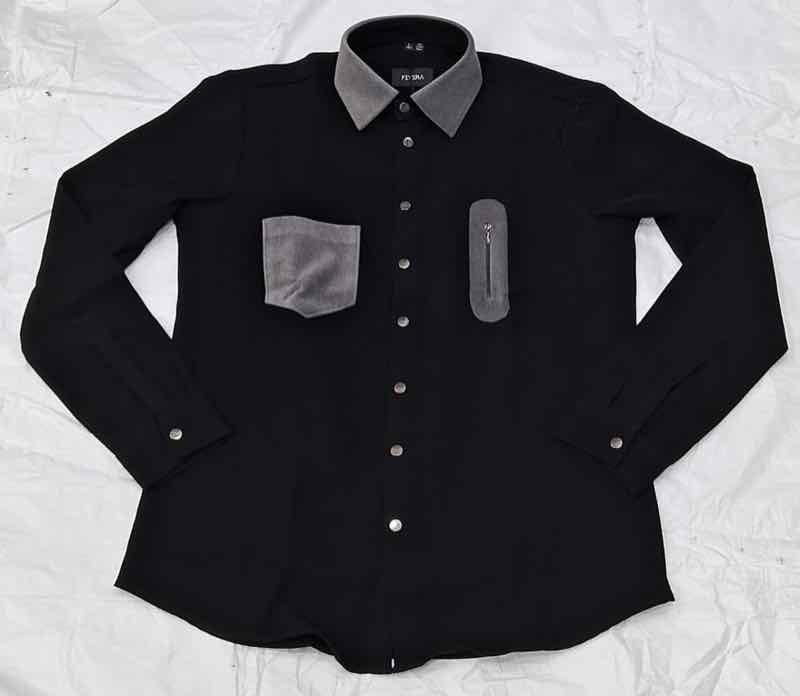
Pl. 04.14Detail: grey contrast collar and pocket, white buttons, on black 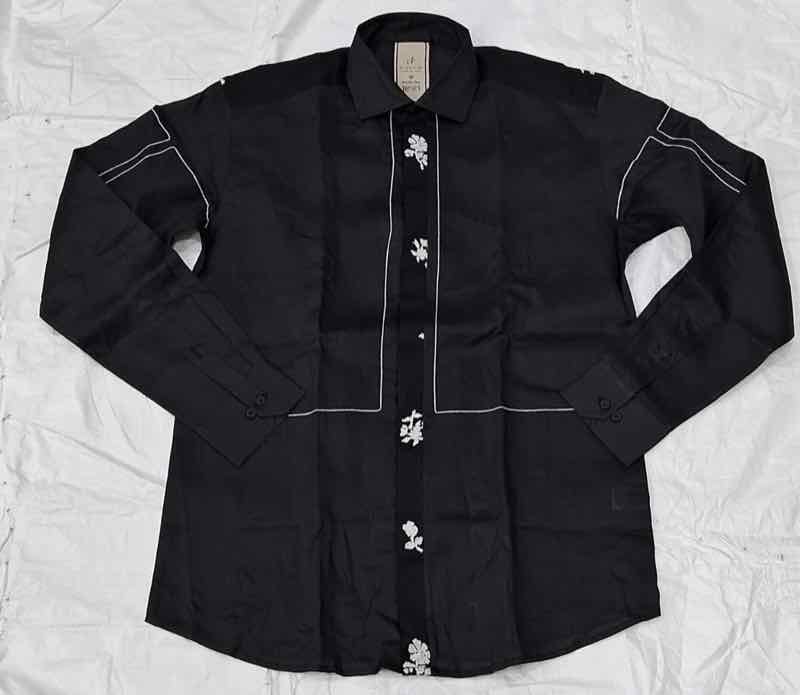
Pl. 04.15Detail: fine white piping along the yoke and placket
Specimen S-08
Contemporary designs
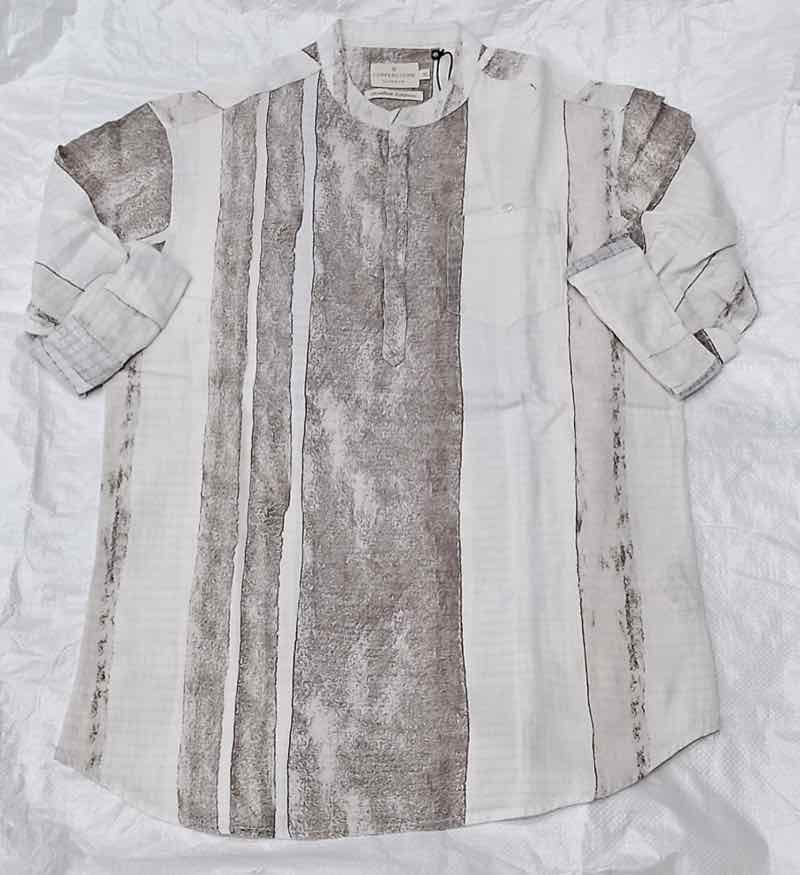
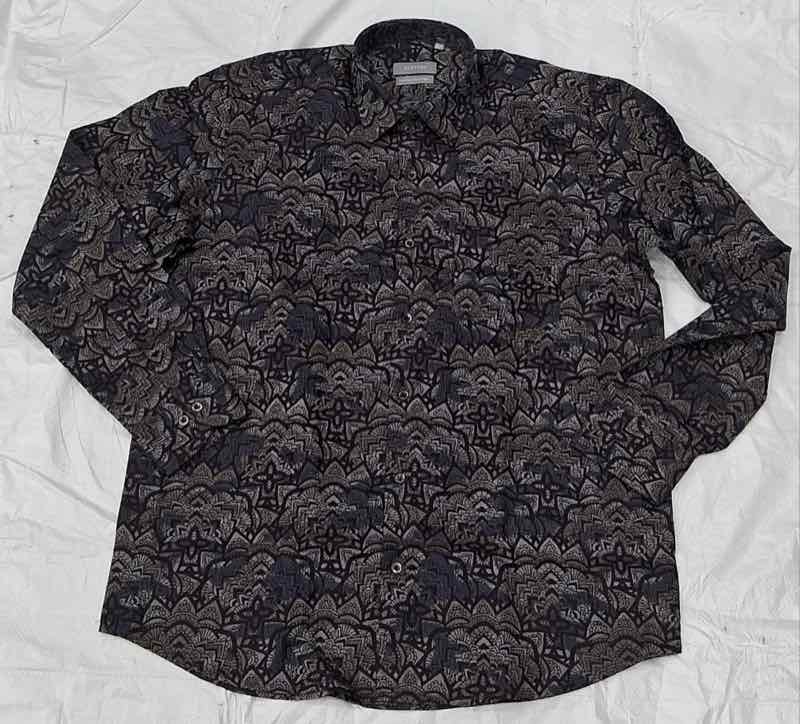
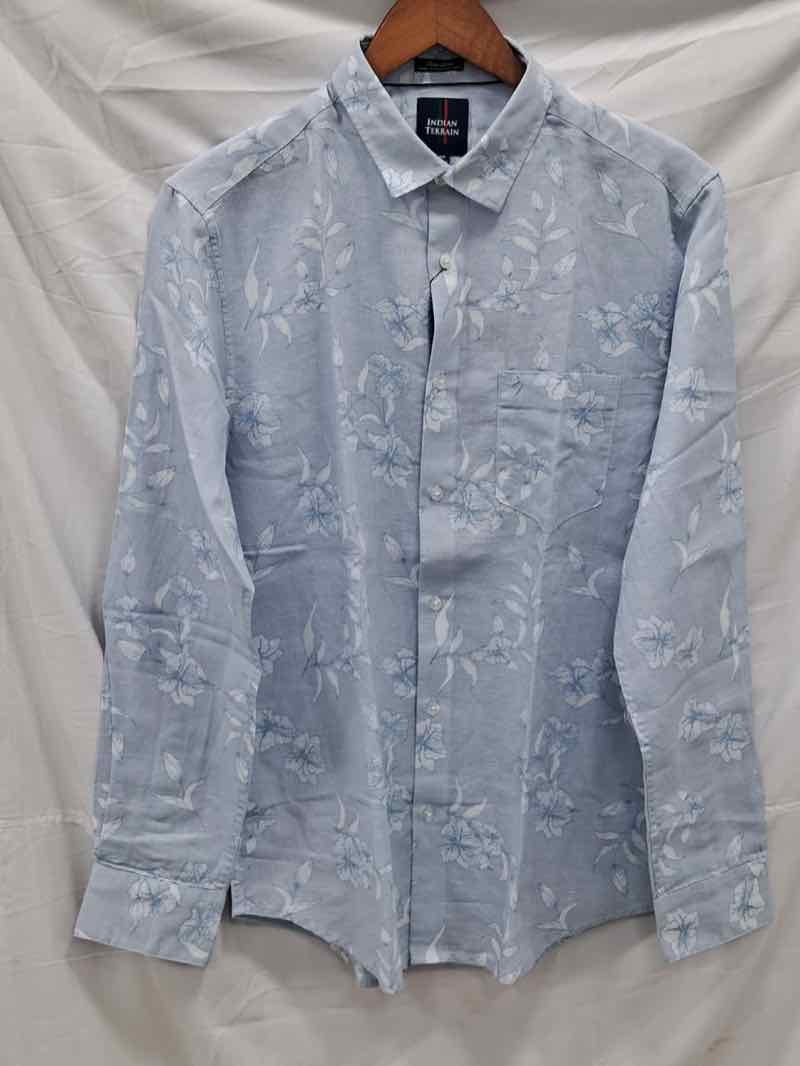
Contemporary shirts take the conventions of formal dressing and move one of them: a print placed in panels instead of all-over, a floral rendered in muted tones on navy, a pattern that follows the seams. The construction remains that of a formal shirt — collar, placket, cuffs — so the result is modern without becoming casual.
Wear contemporary designs where personality is welcome: dinners, gallery openings, weddings as a guest, a Friday in a relaxed office. Anchor them with simple tailoring — a solid trouser and, if needed, an unlined jacket — and let the shirt be the only design statement in the outfit.
Specimen S-09
Classic business shirts
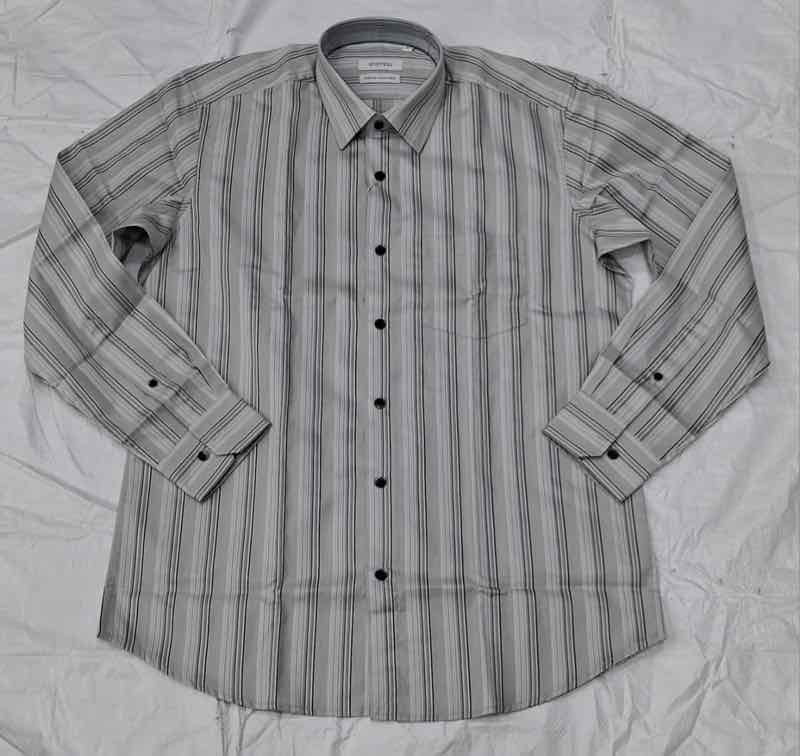
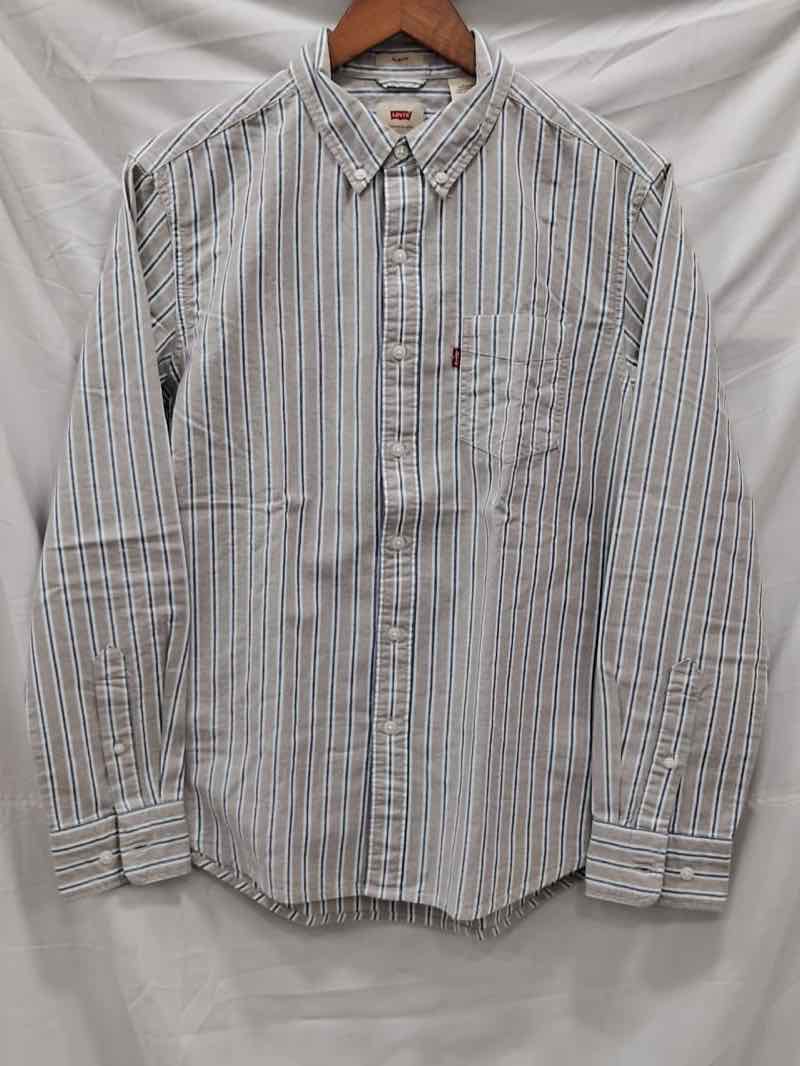
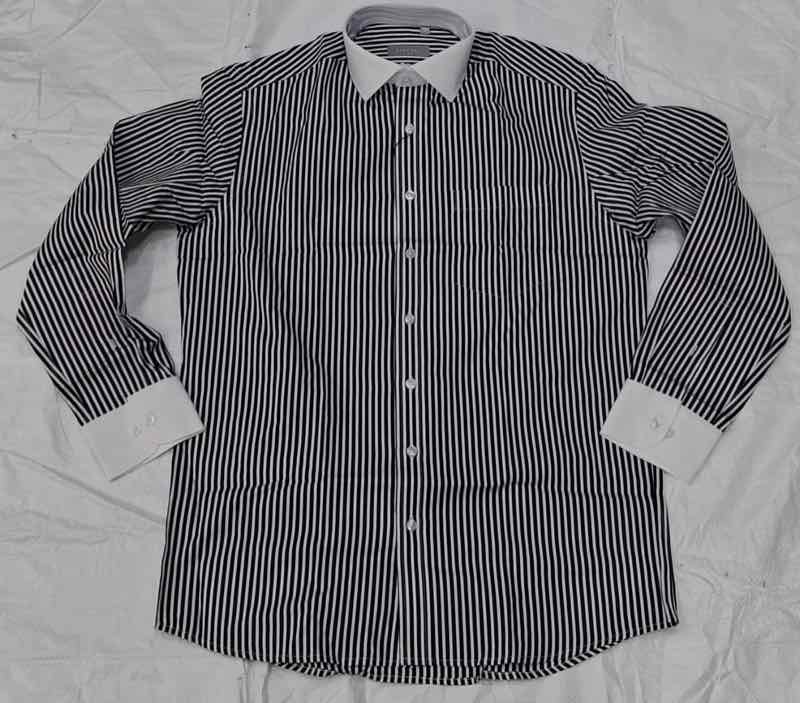
The classic business shirt is the uniform of the professional world, and it rewards restraint: white, pale blue, grey, fine stripes and small checks, a point or semi-spread collar, buttons in tone with the cloth. It should disappear under a suit and still look correct when the jacket comes off.
The striped shirt with a white contrast collar and white cuffs — often called the banker's shirt — is the formal extreme of the family: worn with a charcoal or navy suit and a silk tie, it signals seniority without saying a word. For daily rotation, five or six classic business shirts in white, blue and grey stripes cover nearly every corporate requirement. The men's formal shirts sheet sets out how to build that core.
Shirt, tie, suit: the scale rule
Patterns combine well when they differ in scale. The eye needs to read the suit, the shirt and the tie as three separate surfaces; when two of them share the same size of repeat, they merge into a blur. Three rules cover almost every combination:
- R1
Vary the scale
If the shirt pattern is fine, make the tie pattern noticeably larger — or the reverse. Never repeat the same scale twice.
- R2
One bold element
Allow only one of the three to be loud. If the tie is bold, keep the shirt fine and the suit plain or nearly so.
- R3
Share a colour
Let one colour run through two pieces — the blue of a stripe picked up in the tie — so different patterns still belong together.
-
Elevation ABalanced Plain suit · fine-stripe shirt · bold diagonal tie One pattern is small, one is large, one is absent. Each reads separately. -
Elevation BBalanced Chalk-stripe suit · micro-check shirt · solid tie Two patterns of different type and scale; the solid tie gives the eye a rest. -
Elevation CAvoid Pinstripe suit · fine-stripe shirt · narrow-stripe tie Three stripes at the same scale blur together and shimmer. -
Elevation DAvoid Plain suit · medium check shirt · medium check tie Shirt and tie share type and scale, so neither one leads.
For full outfit building — collars, cuffs, ties and suits together — continue to the formal shirt styling guide.
Visit — Formal Shirts Juhu
See every design in the cloth.
Pattern, texture and colour are best judged in daylight and in your hand. Visit Options Mall in Juhu to explore men's formal shirts across these designs and compare them side by side.
Vile Parle Shopping Centre, Above Sahakari Bhandar, V.M. Road, Juhu, Vile Parle West, Mumbai - 400049