Fit · Style Journal 03 / 12
Slim Fit vs Regular Fit vs Tailored Fit
Three silhouettes, three philosophies. Understanding the differences is the fastest route to a shirt that truly fits.
A shirt can be made from the finest cotton and finished with flawless stitching, yet still look ordinary if the fit is wrong. Fit is the single factor that most decides whether a shirt looks expensive. The three names you will encounter most often, slim, regular and tailored, describe three distinct philosophies of how cloth should relate to the body, and understanding them is the quickest way to stop guessing.
Why the label is only a starting point
Fit names are not standardised. One maker's slim fit can be another's tailored, and a regular fit from one label may be noticeably trimmer than another's. Treat the label as a description of intent rather than a measurement. What matters is how the shirt behaves on your body: through the shoulders, across the chest, at the waist, along the sleeve and around the neck.
It also helps to know where fit lives. The shoulder seam and the collar size are fixed points that are very difficult to change, so a shirt must fit there first. The body and sleeves can be narrower or fuller depending on cut. When you try shirts, judge the shoulders and collar before anything else.
The three fits at a glance
| Area | Regular fit | Tailored fit | Slim fit |
|---|---|---|---|
| Chest | Generous, easy movement | Closer, with comfortable ease | Close to the body |
| Waist | Straight, little shaping | Gently tapered | Noticeably tapered |
| Armholes and sleeves | Fuller | Moderately trimmed | Higher armhole, narrower sleeve |
| Character | Classic, comfortable | Balanced, clean line | Sharp, contemporary |
Regular fit: comfort and tradition
A regular fit is cut with a straight body and generous room through the chest and waist. It is the traditional shape of the business shirt, and it remains the right choice for many men. If you have a broader frame, a fuller midsection, or simply spend long hours at a desk and value freedom of movement, regular fit formal shirts allow the body to move without the fabric pulling at the buttons.
The risk with a regular fit is excess. A well-made regular fit should still look neat when tucked: some fullness at the back is normal, but the shirt should not balloon over the waistband or collapse into a ring of loose fabric above the belt. A good regular fit is generous, not shapeless.
Who it suits
- Broader chests, stronger arms and larger builds
- Men who prefer to wear a vest underneath
- Conservative offices where a classic silhouette is expected
- Long working days in heat, where airflow between shirt and skin matters
Slim fit: a sharper line
Slim fit formal shirts are cut close through the chest and markedly tapered at the waist, with higher armholes and narrower sleeves. On a lean or athletic frame, the effect is crisp and modern: there is no surplus fabric to bunch under a jacket, and the shirt traces a clean line from shoulder to belt.
The drawback is that a slim fit leaves no margin for error. If it is too tight, the placket pulls into horizontal creases between the buttons, the fabric stretches across the shoulder blades when you reach forward, and the sleeves restrict bending at the elbow. A slim fit that strains looks smaller, not slimmer. In Mumbai's humidity, a shirt worn very close to the skin can also feel warmer, so choose a breathable cotton if you favour this cut.
A slim fit that strains looks smaller, not slimmer.
Tailored fit: the middle path
A tailored fit sits between the two. It takes away much of the excess of a regular cut, introducing gentle shaping at the waist, often through back darts, while keeping more ease through the chest and shoulders than a slim fit. For many men it is the most flattering option, because it follows the body without hugging it.
Tailored fits are especially useful for men whose shape falls between categories: a broad chest with a relatively trim waist, for example, or an average build that finds slim fits restrictive and regular fits too loose. They also work well under suit jackets, where a regular shirt can bunch and a slim shirt can feel tight through a long day.
The mirror test: seven checks
Whatever fit you choose, these checks will tell you whether a shirt truly suits you. Stand in front of a full-length mirror, ideally with a second mirror behind you.
- Shoulder seam. It should sit at the edge of your shoulder bone. Too far in and the sleeve pulls; too far out and the shoulder droops.
- Collar. Fasten the top button. Two fingers should slide inside comfortably. The collar should not ride up or gape at the back.
- Placket. Look at the buttons from the front. The fabric should lie flat between them, without horizontal tension lines.
- Chest. Fold your arms. The back should not feel as if it is about to split, and the front should not open between buttons.
- Waist. Tuck the shirt in. A small amount of fullness is fine; heavy folds hanging over the belt are not.
- Sleeve length. With arms relaxed, the cuff should reach roughly the base of your thumb, so that about a centimetre shows beyond a jacket sleeve.
- Movement. Reach forward as if shaking hands, then raise your arms. The cuffs should not retreat far up your forearm, and the shirt should stay tucked.
Reading fit through pattern
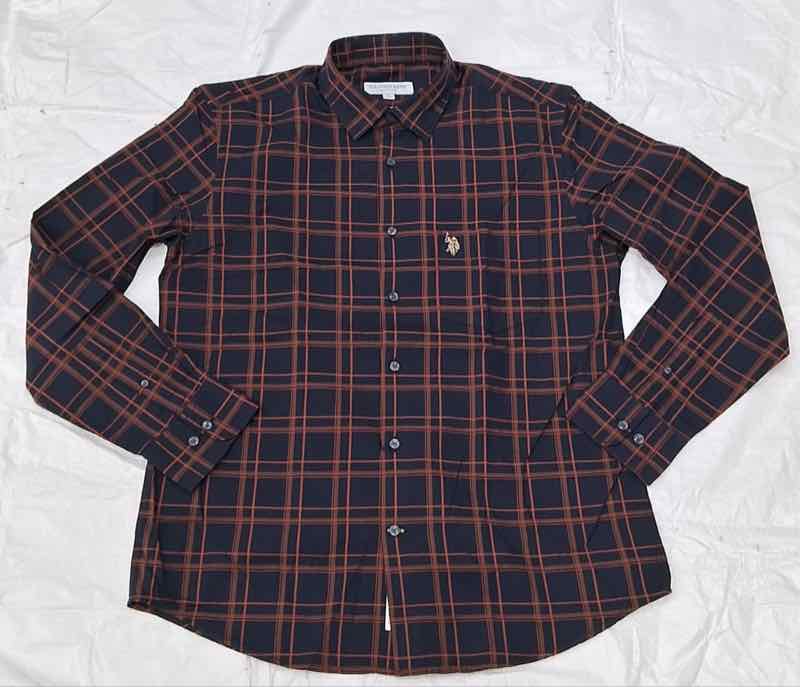
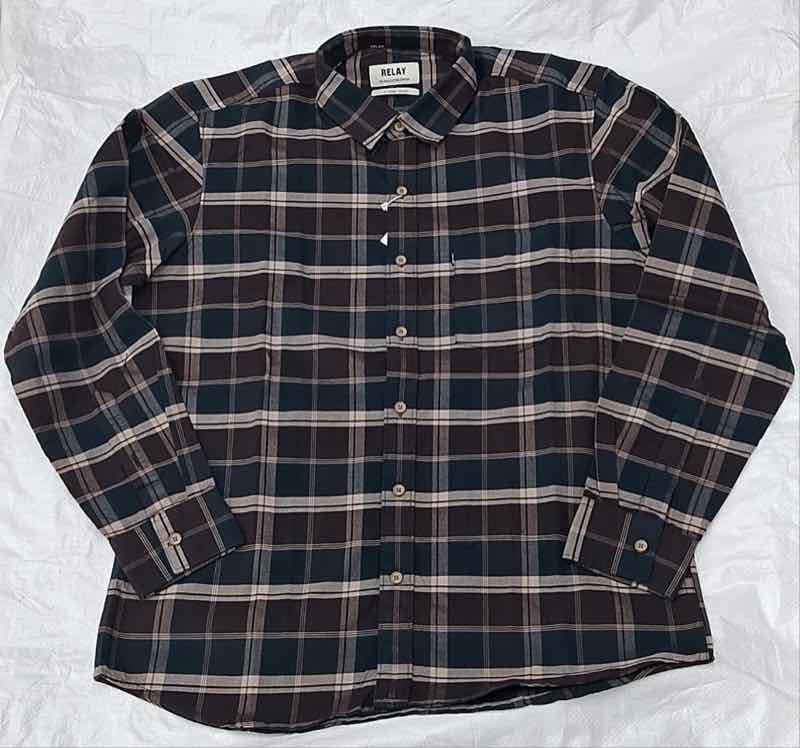
The two shirts shown with this article, a navy and red check and a navy, maroon and white check, illustrate something useful: checks are excellent fit indicators. On a well-fitting shirt, the lines of a check run straight and level across the chest and down the body. Where the fit is too tight, the lines bow and distort over the chest or pull diagonally from the buttons. Where there is too much fabric, the pattern collapses into folds at the waist.
Next time you try a checked shirt, stand square to the mirror and simply follow the horizontal lines. They will tell you more about the fit than any label.
Choosing for your body and your day
Your build is the first consideration, but how you spend your day matters too. A man who commutes by train, sits through long meetings and moves between air-conditioned offices and humid streets needs a shirt that can breathe and move. A man who wears a suit every day needs a shirt that sits neatly under a jacket without bulk.
A practical guide
- Lean or athletic, wearing jackets often: slim fit, in a breathable poplin.
- Average build, mixed office and occasion wear: tailored fit, the most versatile option.
- Broad frame or a preference for ease: regular fit, with a well-proportioned body that avoids excess.
- Wedding and celebration season: whichever fit gives you freedom to move, dance and sit through a long dinner. Comfort shows in the photographs.
Fit under layers
Think, too, about what goes over the shirt. Under a structured suit jacket, excess fabric bunches at the small of the back and around the armholes, so a tailored or slim cut usually looks cleaner. Under a Nehru jacket or a bandhgala at a wedding function, the shirt needs enough room in the sleeve to move freely beneath a close-fitting outer layer, and the collar must sit neatly inside the jacket's own neckline. Worn alone on a warm afternoon, a slightly easier fit allows air to circulate and keeps the shirt from clinging.
Age and posture matter less than many men assume. A well-proportioned tailored fit suits a man of sixty as readily as a man of twenty-five; what changes is the margin of ease each prefers. Choose the cut that lets you stand naturally, without holding in your stomach or squaring your shoulders for the mirror.
For a deeper look at how fit, proportion and tailoring work together, explore our page on shirt fits and tailoring.
The right fit is personal
There is no single correct fit, only the right fit for a particular body and a particular life. The aim is always the same: a shirt that follows your shape cleanly, allows you to move freely and looks as composed at the end of the day as it did in the morning. The best way to find it is to try several cuts side by side, in front of a good mirror, and compare. Visit Options Mall in Juhu, Vile Parle West, to explore slim fit, regular fit and tailored formal shirts and try fits in person.