
Culture · Style Journal 10 / 12
The Changing Language of Men’s Formal Fashion
Formality is no longer a single dress code. It is a vocabulary — and the modern man is expected to be fluent.
For most of the twentieth century, formal dress was a single sentence with a fixed grammar: dark suit, white or blue shirt, tie, black shoes. Today it is closer to a language, with a wide vocabulary and a grammar that bends according to the room. The modern man is not expected to abandon formality, but he is expected to speak it fluently — to know which words to use, and when.
From a uniform to a vocabulary
The old code had real virtues. It was clear, it was fair, and it removed a great deal of anxiety: if everyone wore roughly the same thing, nobody could get it badly wrong. Its weakness was that it said very little about the individual. Two men in identical navy suits and white shirts were distinguishable mainly by fit and grooming.
What has replaced it is not the absence of rules but a more nuanced set of signals. Colour, pattern, texture, collar shape and even the presence of pockets now carry meaning. A white poplin shirt with a cutaway collar says something quite different from a blue oxford button-down, and both say something different again from a textured check with flap pockets. Reading and using those signals is what modern formal dressing requires.
In India, this shift has a particular texture of its own. Indian dress has always moved comfortably between registers — the same family occasion might involve a kurta for the ceremony and a shirt and trousers for the reception. That fluency with switching codes has made many Indian men quick to adopt the newer, more flexible approach to formal wear, especially in cities like Mumbai where climate and workplace culture both favour lightness over ceremony.
The forces behind the change
Several shifts have pushed the formal wardrobe in this direction at once.
- Workplaces have diversified. Start-ups, creative agencies and technology firms sit alongside banks and law firms, often in the same building, each with its own idea of appropriate dress.
- The tie has become optional. Once the tie disappears, the shirt has to carry the outfit alone, and plain white is not always enough to do that.
- Working hours blur into social hours. A shirt worn to the office may be expected to work at a dinner, a gallery opening or a friend's engagement party the same evening.
- Comfort is taken seriously. Men now expect formal clothes to breathe, stretch slightly and survive a commute — expectations that are especially reasonable in a humid coastal city.
- Visual culture has expanded. Men see far more clothing, from far more places, than they once did, and they have grown more confident experimenting with it.
Pattern: the check comes indoors
Nothing illustrates the change better than the check shirt. For generations, checks belonged firmly to the country, the weekend and the outdoors; a bold check in the office would have been seen as a misunderstanding. Now checks occupy a large and respected part of the smart wardrobe.
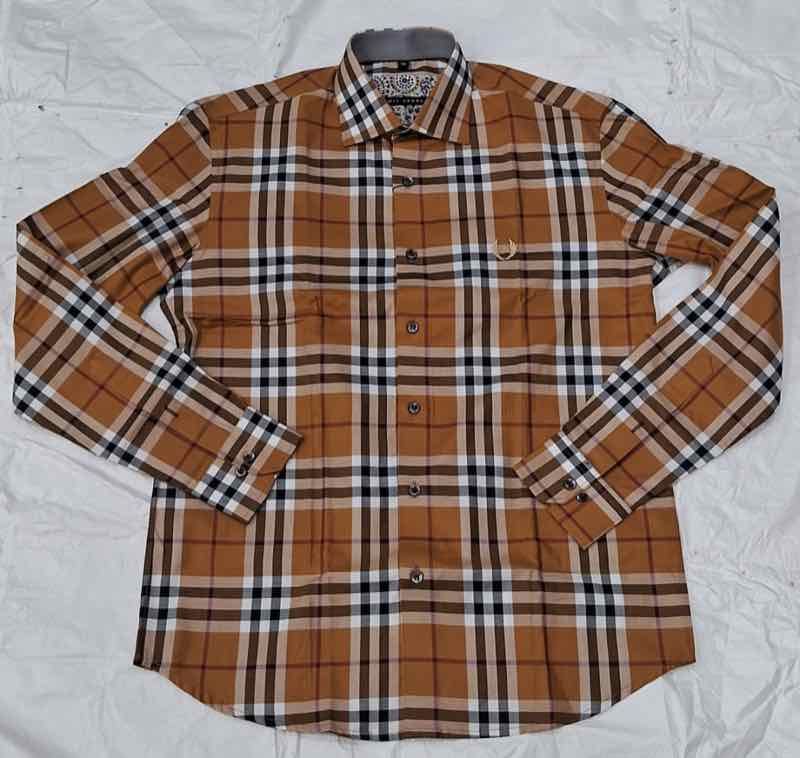
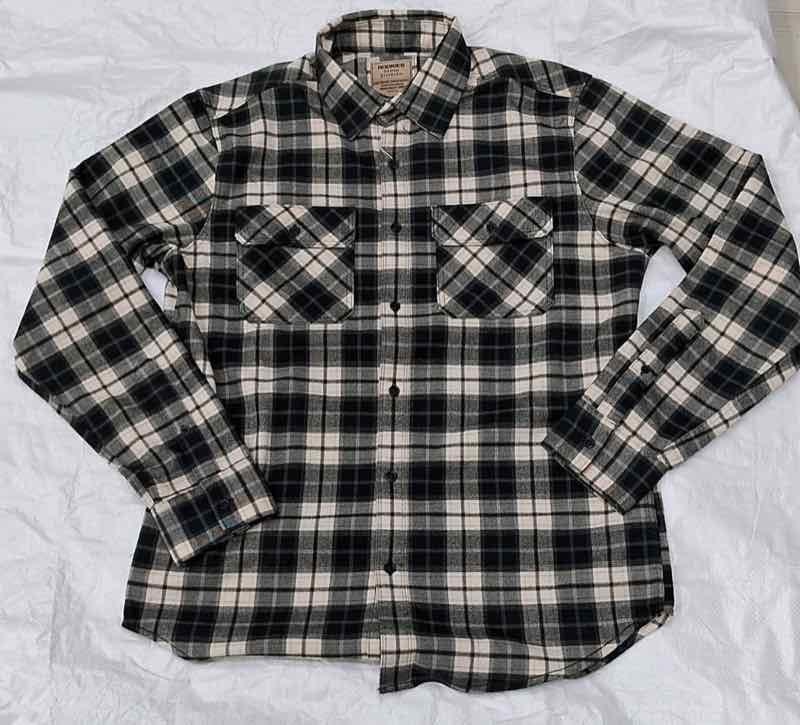
Consider an ochre, black and cream check. Its warm palette and strong rhythm are unmistakably relaxed, yet worn tucked into charcoal trousers with black leather shoes and a dark knitted tie, or under a navy unstructured jacket, it becomes an articulate smart-casual statement — the kind of shirt that suits a Friday at the office, a design review or an informal client lunch. A black and white buffalo-style check with flap pockets sits further towards casual, a shirt for evenings and weekends, but it shows the same principle at work: a strong pattern becomes smart when everything around it is disciplined.
A bold pattern becomes formal not by itself, but by the company it keeps.
How to read a check
Small, tight, low-contrast checks — a fine blue gingham, a muted tattersall — remain close to formal and can be worn with a tie. As checks grow larger, more colourful and higher in contrast, they move steadily towards casual. Pockets, especially flap pockets, push a shirt further still. Knowing where a particular check sits on that scale is the key to wearing it correctly.
Colour: a wider palette, used with care
The traditional formal palette was almost entirely white and light blue. Those two remain the foundation, and white and blue formal shirts are still the most useful shirts a man can own. But around them a wider palette has become acceptable: soft pink, lilac, pale grey, ecru, sage, and deeper tones such as navy, wine and forest green for evening and smart-casual wear.
The grammar here is about saturation. Pale versions of almost any colour can be worn in a professional context; deep and bright versions shift the shirt towards evening or casual use. A pale lilac shirt with a charcoal suit is entirely at home in a meeting. A deep purple shirt with the same suit is a statement for a cocktail evening or a wedding reception. Both are correct; they are simply in different registers.
Texture and fabric as signals
Texture is perhaps the subtlest part of the new vocabulary, and the one most often overlooked. A smooth, fine poplin or a lustrous twill reads as formal. Oxford cloth, with its visible basket weave, reads as relaxed but respectable. Linen and linen blends, with their slubs and natural crumple, read as warm-weather ease — and in Mumbai, where the air is heavy for much of the year, that ease is often exactly right.
Matching texture to occasion is one of the quieter skills of modern dressing. A slubby linen-blend shirt at a formal board meeting can look underprepared; a high-sheen twill at a beach-side lunch in Juhu can look overdressed. Our page on shirt fabrics and construction explains how the main weaves differ.
Collars, sleeves and silhouette
Shape has its own vocabulary too. The collar is the most expressive element: a wide spread or cutaway collar reads as polished and slightly continental, ideal with a tie or open at the neck under a suit; a classic point collar is conservative and dependable; a button-down is relaxed and practical, holding its shape neatly without a tie; and a camp or band collar sits firmly at the casual end, a deliberate departure from business conventions.
Sleeve length speaks just as clearly. Full sleeves remain the formal default, and they should be rolled neatly — two or three folds to just below the elbow — rather than pushed up when the day turns hot. Half-sleeve shirts have long been part of Indian working life, and in a well-cut, crisp fabric they look entirely respectable in many offices, but they do not belong under a jacket or with a tie. Silhouette completes the picture: the trend towards slimmer, more tailored cuts has sharpened the formal look, while the return of relaxed shapes with straight hems has given casual shirts a new ease. Both can be right; what matters is that the shape is chosen rather than inherited. Our page on formal shirt styles sets out the main collar and cuff options.
What has not changed
For all the new freedom, some principles have proved remarkably durable. They are the grammar that keeps the vocabulary coherent.
- Fit is non-negotiable. A relaxed dress code is not a relaxed fit. Shoulder seams, sleeve length and collar size matter as much as they ever did.
- Condition matters. A pressed check shirt looks smarter than a crumpled white one.
- One statement at a time. A bold shirt wants plain trousers; a strong tie wants a quiet shirt.
- Context comes first. Interviews, formal ceremonies and serious meetings still call for the classic code.
- Shoes and belt anchor everything. Good leather can lift a casual shirt into smart territory; poor footwear can drag a formal one down.
Speaking the language well
Fluency in any language comes from practice, and the same is true here. The man who dresses well in the modern sense has not memorised a list of rules; he has developed an instinct for register. He knows that the white shirt is his most formal word and the bold check with flap pockets one of his most casual, and he knows the many shades in between. He chooses accordingly, with a little more care on the days that matter.
That instinct is easiest to build with a varied but coherent wardrobe: a base of plain white and blue, a middle ground of stripes and subtle checks, and a few expressive pieces in stronger patterns and colours. For practical guidance on putting these together, our formal shirt styling guide covers pairing, layering and accessories, and Choosing Shirts for Different Occasions maps shirts to specific events.
The best way to learn the vocabulary is to see it in front of you — plain and patterned, smooth and textured, side by side. Visit Options Mall in Juhu, Vile Parle West, to explore men's formal wear and discover how far a modern shirt wardrobe can range while still speaking with one voice.