
History · Style Journal 01 / 12
The Evolution of Men’s Formal Shirts
From hidden undergarment to the most visible statement in a man's wardrobe — how the formal shirt earned its place.
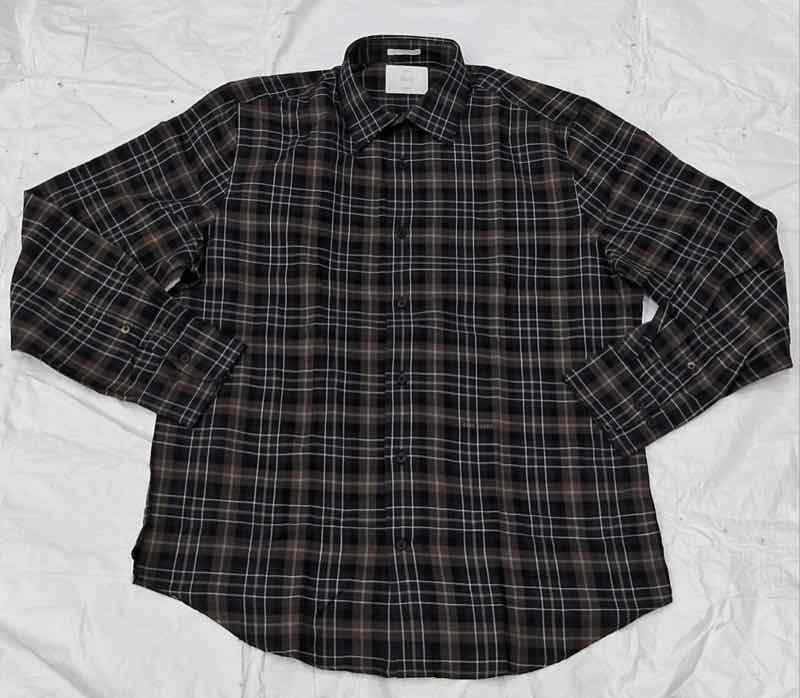
For most of its long life, the shirt was not meant to be seen. It was linen worn against the skin, a washable layer that protected expensive outer garments from the body, and only its edges, at the throat and the wrist, were allowed into public view. The story of the men's formal shirt is the story of how those edges grew into the whole garment, and how an undergarment became the most visible statement in a man's wardrobe.
From undergarment to understatement
For centuries in Europe, the shirt was a simple, loose construction: rectangles of linen, gussets under the arms, a slit at the neck and gathered fullness at the body. It was pulled over the head, long enough to tuck deep into breeches, and changed far more often than the coat or waistcoat worn over it. Cleanliness was the point. A man's outer clothes might be brushed and aired for weeks, but his shirt was laundered, and fresh white linen at the neck and cuffs was understood as a sign of means. Only someone with servants, or with money to pay a laundress, could keep that linen consistently bright.
This is the root of a habit that still governs good dressing today. The parts of a shirt that show, the collar and the cuffs, carry the message. Everything else is foundation. When you look at a man in a well-cut jacket and notice first the clean line of collar against his jaw, you are reading a code that is several hundred years old.
Ruffles, neckcloths and the rise of restraint
In the seventeenth and eighteenth centuries, the visible parts of the shirt became theatrical. Lace, frills and elaborate neckcloths announced rank. Then, around the turn of the nineteenth century, men's dress in Britain and much of Europe took a decisive turn towards restraint. Dark, well-fitted coats replaced coloured silks, and attention moved to the precision of cut and the immaculate whiteness of linen. The neckcloth, tied carefully around a high collar, became the place where a gentleman showed his skill.
That shift matters because it set the terms we still use. Modern formal dressing is built on understatement: a narrow range of colours, quality expressed through fabric and fit rather than ornament, and a crisp shirt as the reference point for everything worn around it.
The detachable collar and the starched front
The nineteenth century brought the invention that defined the formal shirt for generations: the detachable collar. Collars and cuffs wore out and soiled faster than the body of the shirt, so making them separate meant a man could wear a fresh collar each day without laundering the entire garment. Collars were heavily starched, sometimes almost board-stiff, and fastened to the shirt with studs at front and back.
Evening wear developed its own rigid version, the stiff starched bib front, which survives today in the formal dress shirt worn with a dinner suit. The day shirt, meanwhile, gradually softened. Towards the end of the century, shirtmakers began producing shirts that opened all the way down the front, worn like a coat rather than pulled over the head. By the early twentieth century, the button-front shirt had become the standard construction, and the basic anatomy we recognise today was in place: collar, yoke, placket, cuffs, a tail long enough to stay tucked.
Soft collars and the working man's uniform
The great change of the early twentieth century was the attached soft collar. Starched detachable collars lingered in conservative offices and among older men, but after the First World War comfort steadily won. A collar sewn onto the shirt, softer and lighter, was simpler to wear and easier to launder, and it gradually became the norm for everyday business dress.
This was also the era when the shirt became a symbol of a particular kind of work. The phrase white-collar attached itself to clerical and professional jobs, distinguishing the office from the factory floor. The white shirt was the uniform of the desk, the bank and the boardroom, and for decades coloured shirts were regarded with some suspicion in serious business settings. Pale blue gradually earned acceptance, then stripes, and the palette of the professional wardrobe slowly widened.
Checks, sport and the borrowing of codes
Menswear has always moved by borrowing, and much of what feels standard in a shirt today began on the playing field or in the countryside. The button-down collar is generally traced to sportsmen at the end of the nineteenth century, who fastened their collar points so they would not flap while riding. Checked cloths, long associated with country clothing and the outdoors, migrated steadily into town as rules relaxed.
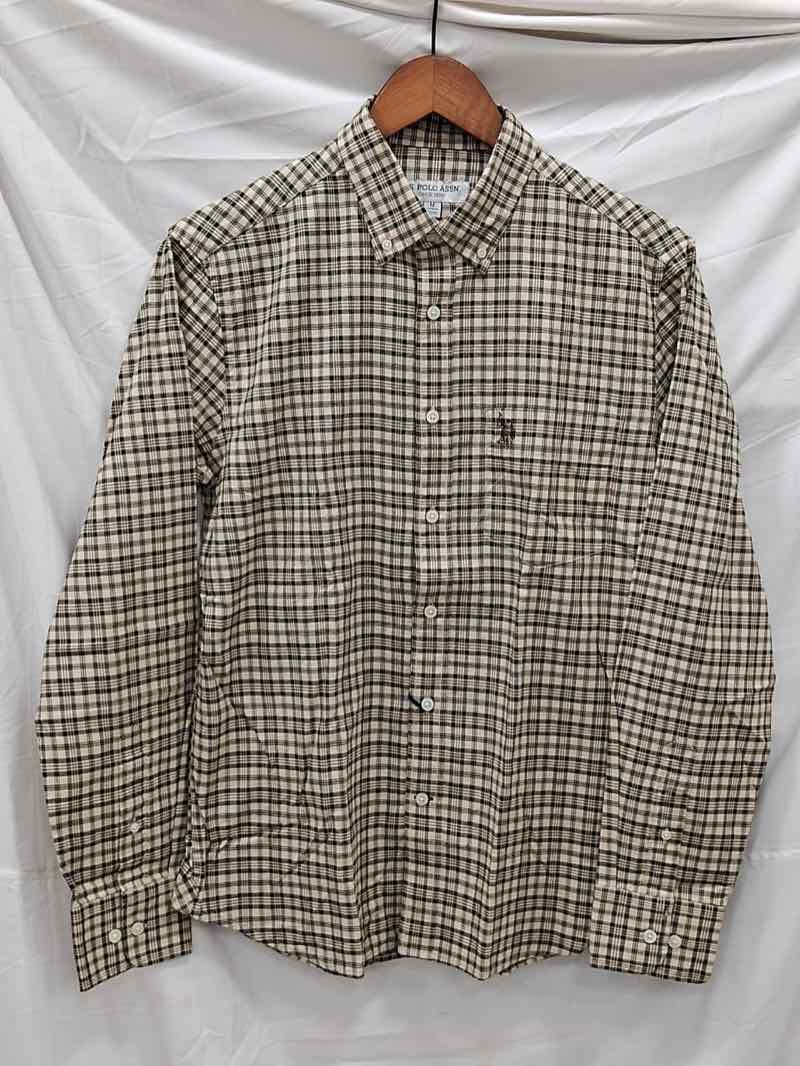
The check shirts that accompany this essay illustrate that journey well. A brown and cream check, or a beige and brown check with a soft, earthy palette, carries the warmth of its rural origins. It would once have been unthinkable at a city desk. Today, in a smaller scale and a finer cloth, a check sits comfortably in a business-casual office, worn open at the neck under a navy or stone jacket. The rules did not disappear; they simply became more nuanced, and knowing which check belongs where is now part of a modern man's fluency.
The rules did not disappear; they simply became more nuanced.
Synthetics, easy care and the mid-century office
The middle of the twentieth century introduced new fibres and new promises. Polyester and other synthetics, often blended with cotton, offered shirts that dried faster and creased less, and easy-care finishes became a selling point for men who washed their own clothes. The benefit was real, but so was the cost: early blends could feel clammy, especially in hot climates, and many men eventually returned to pure cotton for comfort, using blends selectively where practicality mattered most.
In India, this tension has always been sharper. A shirt that behaves well in a temperate European office may be punishing on a humid Mumbai afternoon. The country's own deep tradition of cotton weaving made breathability an instinctive standard, and the best men's formal shirts here have long been judged first by how they feel at four in the afternoon, not only by how they look at nine in the morning.
The modern formal shirt: fit becomes the message
In recent decades the most significant evolution has been in silhouette. The full-cut shirt of the late twentieth century, generous through the body and billowing at the waist, gave way to closer cuts. Slim fit formal shirts and tailored shapes became widespread, partly in reaction to excess fabric and partly because jackets themselves grew trimmer. Regular fits did not disappear; they were refined, cleaner through the waist than their predecessors but still easy across the chest and shoulders.
The result is a wardrobe of choices rather than a single correct shirt. A modern professional might own:
- White and pale blue poplin in a clean, close fit for meetings and presentations, the direct descendants of the old white-collar uniform.
- Fine stripes and small checks for daily office wear, the once-suspect patterns now fully at home in business shirts for men.
- Oxford cloth with a button-down collar for Fridays and travel, still carrying a trace of its sporting origins.
- Bolder checks like the brown-and-cream examples shown here, reserved for weekends, informal lunches and evenings out.
Each of these carries a little of the history above. To understand the fit choices in detail, read our comparison of slim, regular and tailored fits.
What history teaches the modern wearer
History is useful only if it changes how you dress tomorrow morning. Three lessons from the shirt's long evolution are worth keeping in mind.
The collar still does the talking
Just as the detachable collar once announced a man's standards, today's collar is the first thing people register. A collar that sits flat, with points that do not curl and a band that meets the neck without gaping, communicates care more effectively than any expensive label. Check it in the mirror with the top button fastened and then open: both should look intentional.
Cleanliness remains the original luxury
The shirt began as the washable layer, and freshness is still its first duty. In a city with Mumbai's humidity, that means rotating shirts so each has time to rest, choosing breathable cottons for long days, and treating collars and cuffs with particular care when laundering.
Formality is a scale, not a switch
Over two centuries, the shirt has moved from a single standard to a spectrum: starched evening fronts at one end, soft checked cottons at the other. Dressing well is the art of placing yourself correctly on that scale for each occasion, whether a client meeting in Bandra Kurla Complex, a family celebration or a relaxed Sunday lunch in Juhu.
The shirt today
The formal shirt has travelled an extraordinary distance: from hidden linen to starched collars, from the clerical uniform to a garment that expresses individual taste through colour, pattern, fabric and cut. What remains constant is the principle established centuries ago, that a clean, well-made shirt is the foundation on which every other element of a man's appearance rests. For a broader view of the shirts that define a modern wardrobe, explore our formal shirt styles, or visit Options Mall in Juhu, Vile Parle West, to see formal shirts in person and try fits for yourself.